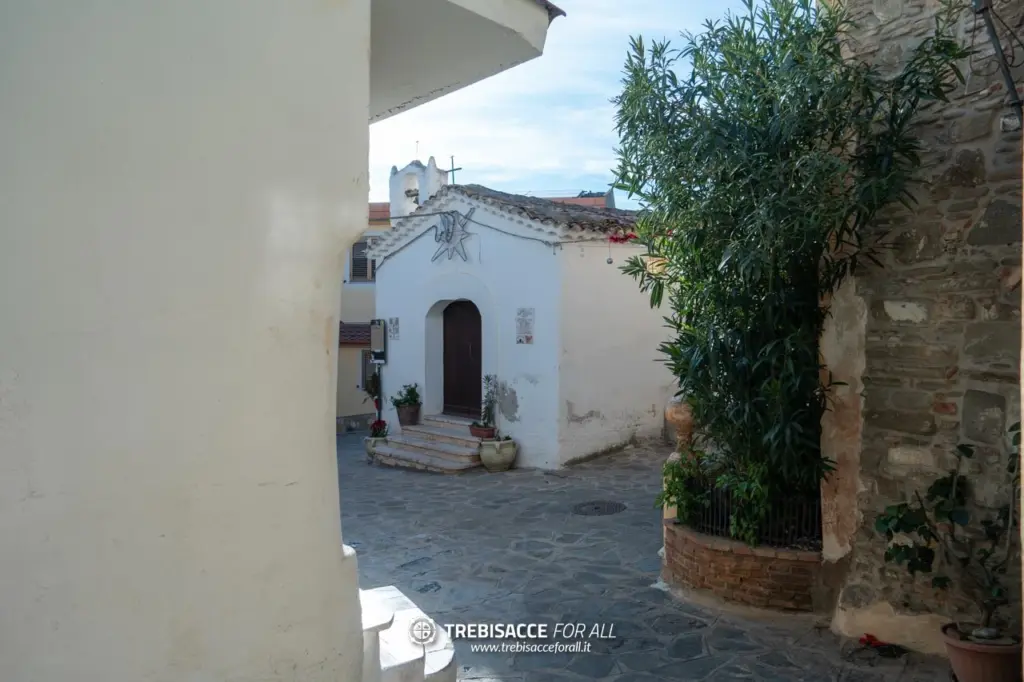
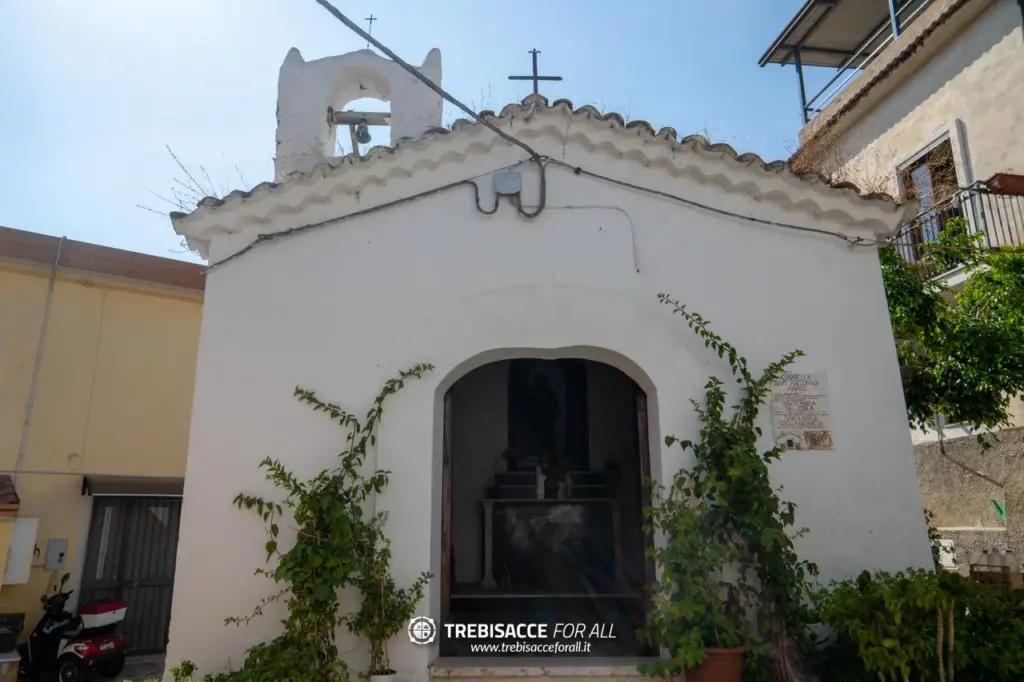
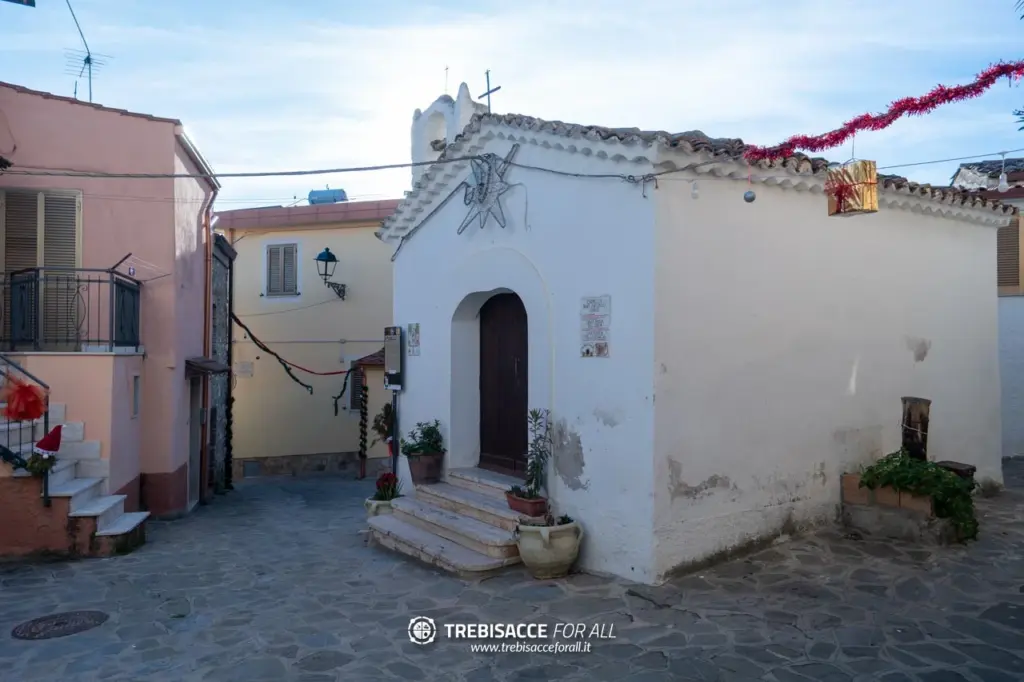
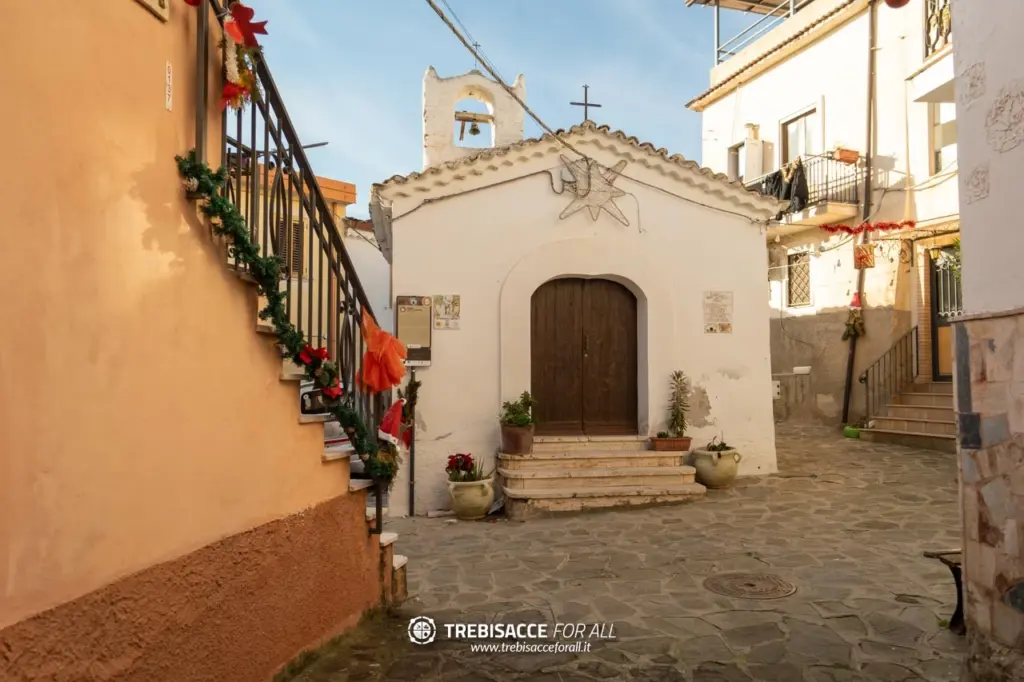
In the heart of the historical center, among alleys that seem to hold back one’s step and breath, a small door opens. It is the Chapel of Sant’Antonio Abate. Small, yes. But capable of containing a world.
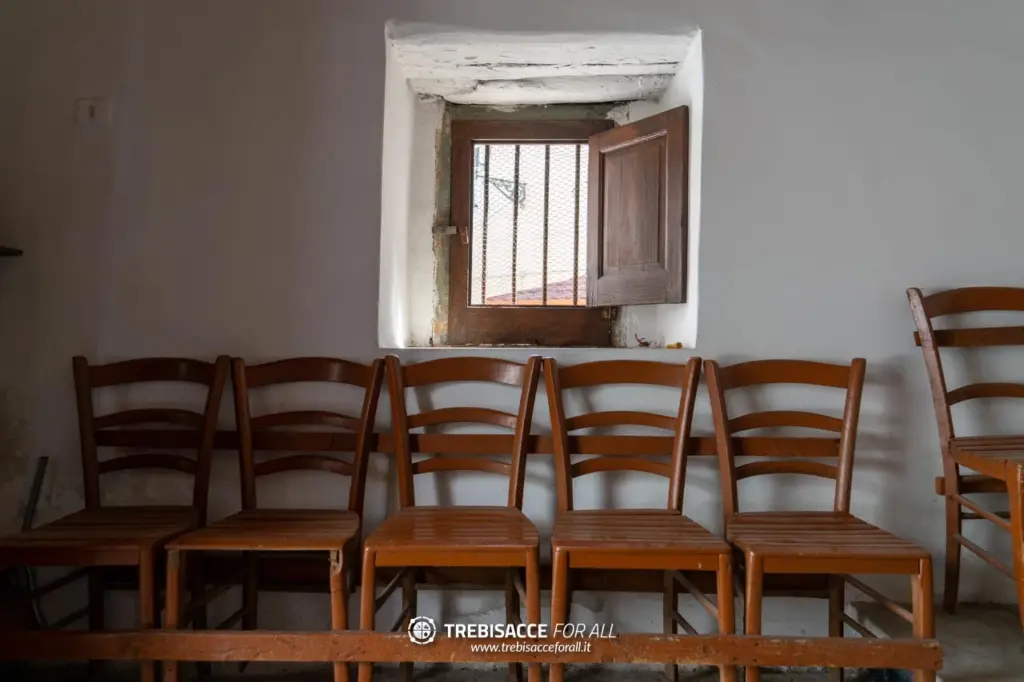
Entering, one has the feeling of being in a microcosm of popular devotion: every object is memory, every wall is stratification. Its architecture is simple, almost discreet, but it houses elegant stylistic reinterpretations of the early twentieth century that embellish its interior without betraying its essence: that of a place born to be close to the people.
The history of the chapel tells, as often happens in Southern villages, of a slow metamorphosis of faith. Today it is dedicated to Sant’Antonio Abate, but it was not always so. In 1752, in fact, it was consecrated to Santa Maria dell’Idra, to the Madonna delle Lettere, and to Santa Maria della Grancia. Different dedications, a sign of eras, of confraternities, of communities that succeeded one another, leaving an imprint. It is proof that sacred places are not immobile: they change name, but remain safeguards of identity.
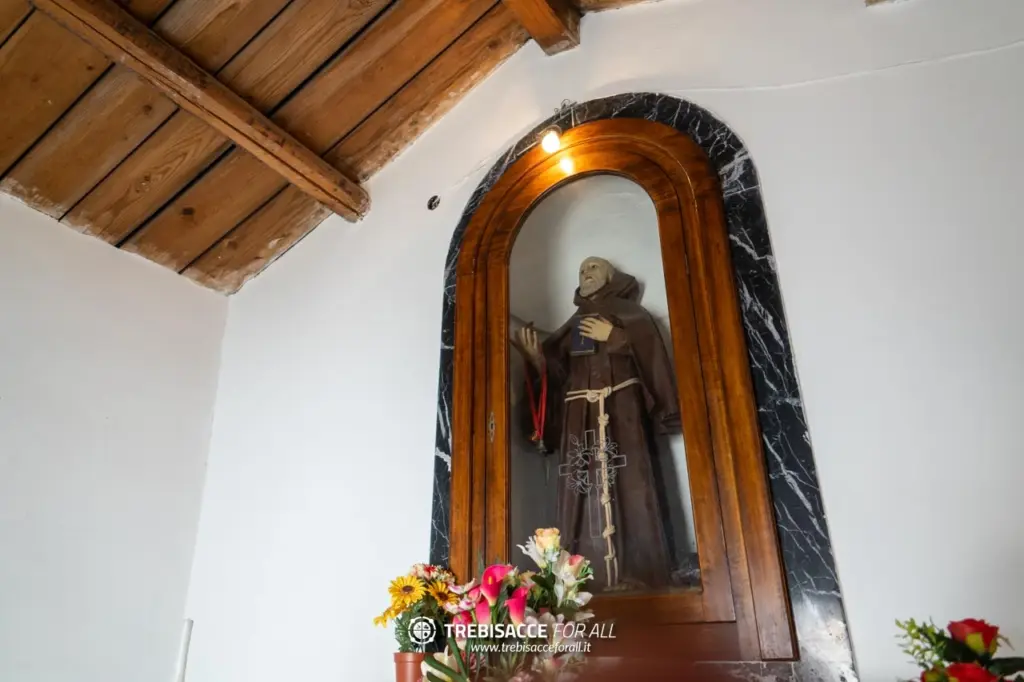
Inside, there is a papier-mâché sculpture from 1909 depicting Sant’Antonio Abate. It is a work fragile in its material, but extremely powerful in its meaning. The saint’s gaze, the hermit’s staff, the animal beside him: symbols that speak of protection, of work in the fields, of peasant life. Here the sacred is not distant, it is not solemn in an abstract way. It is close. It is daily.
And this is fully understood on January 17th, the day dedicated to the saint. The chapel becomes the beating center of the community. The streets come alive with horses and donkeys in procession, popular games are held, the “incanto” takes place—the ancient auction of local agricultural products. And above all, the blessing of the animals is celebrated: an ancient ritual, deeply felt by those who live in contact with the land. It is a gesture that unites faith and work, spirituality and survival, past and present.
In places so small, something great is guarded: the ability to keep people together. The chapel is not just a building. It is a meeting point, a relational space, a living archive of gestures and traditions. Here, devotion intertwines with social life, neighborhood feasts become occasions for mutual recognition, and the sacred coexists with the daily life without hierarchies.
This is the secret of village chapels: they do not impose, but welcome. They do not dominate the space, they inhabit it. And they continue, silently, to tell the story of a community that through faith has learned to recognize itself, to protect itself, to stay united.