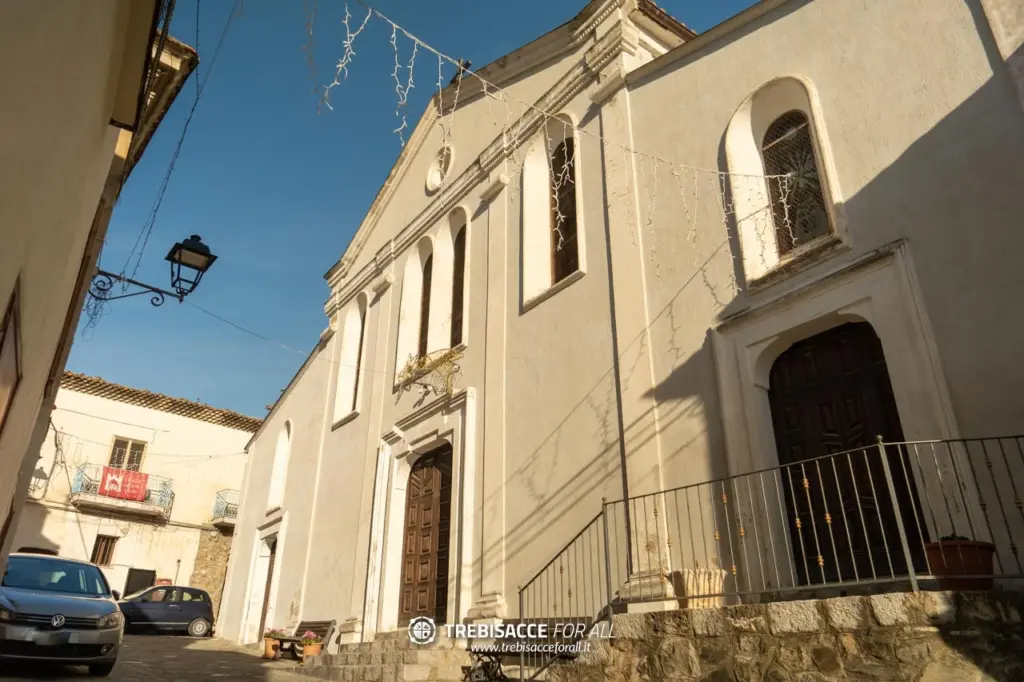
In the heart of the historical center, among the houses that look out onto the alleys like wings of an ancient theater, stands the Mother Church of San Nicola di Mira. It is not only a religious building: it is the most ancient voice of Trebisacce, the place where the city learned to recognize itself.
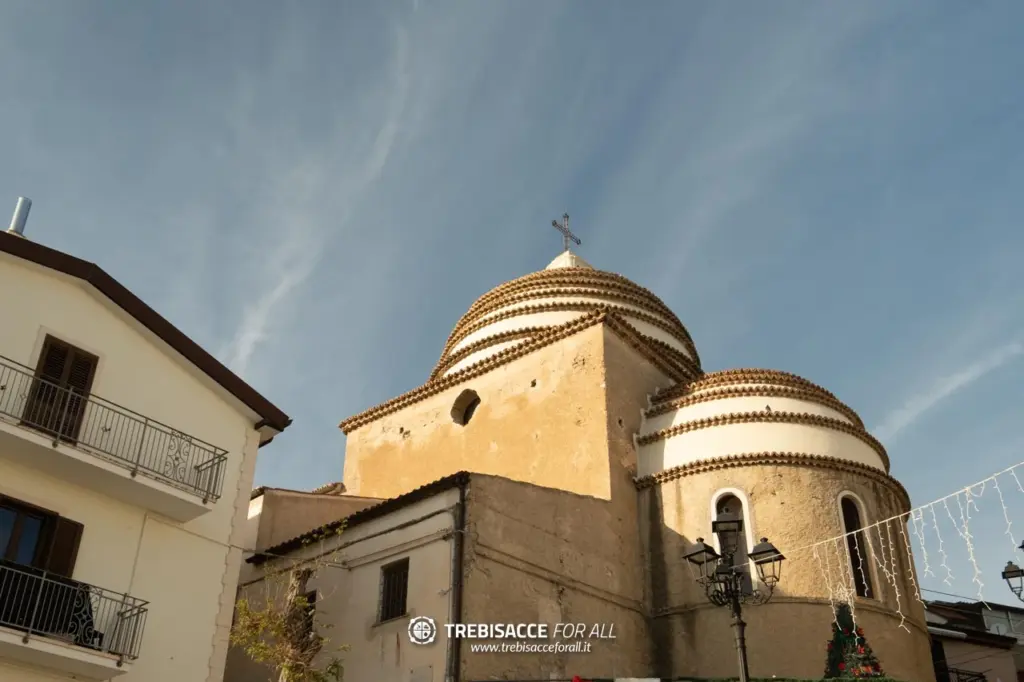
Its origins sink into the 11th century, in a time marked by the Byzantine presence along the Ionian coast. Of that heritage, today only a few traces remain that can be perceived in the trullo-shaped dome, but the church, like every living organism, has not remained immobile.
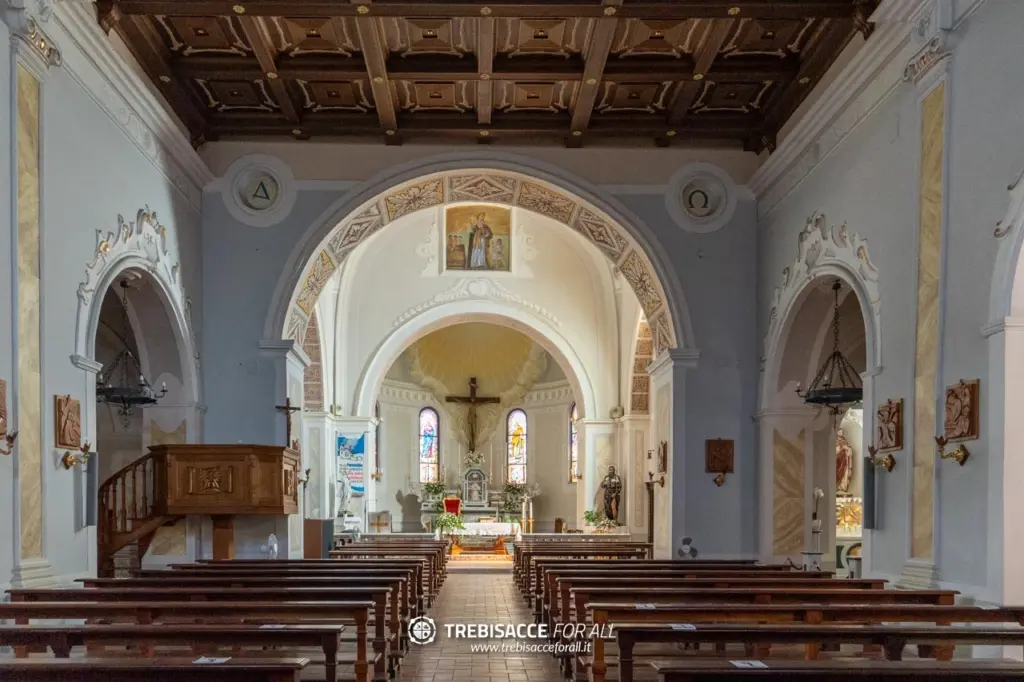
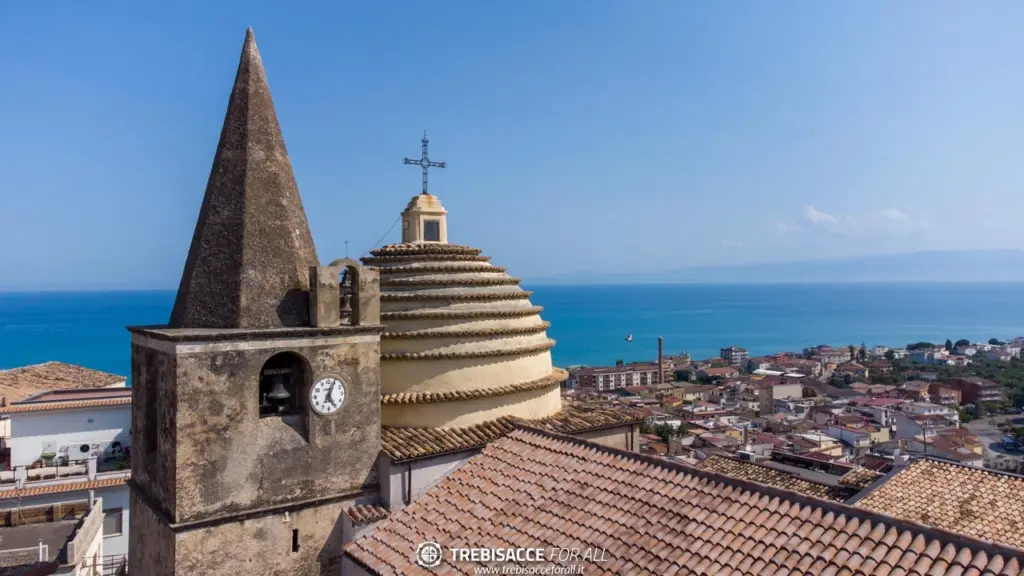
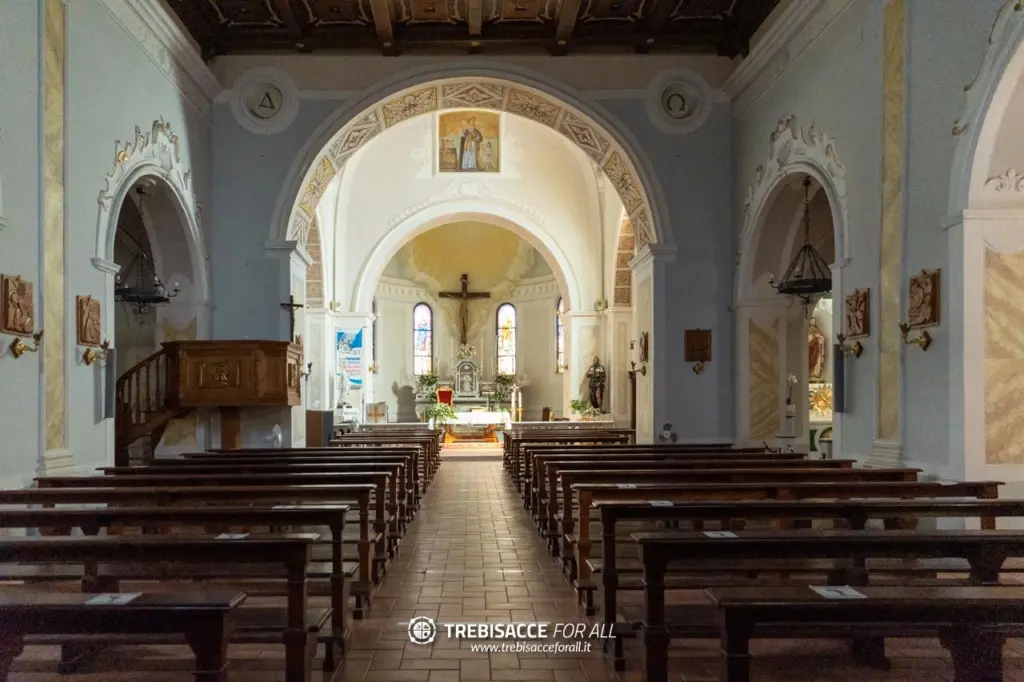
Over the centuries, it has known transformations and remodelings: important interventions in the early 16th century, additions and decorations in the Baroque era. Today, it presents itself with a three-nave plan, the fruit of this long stratification. Alongside, the bell tower – a refined example of Calabrian-Lucanian architecture of the 16th and 17th centuries – designs a profile in the sky that is by now an integral part of the sacred building’s identity.
Entering the Mother Church of San Nicola di Mira means performing a gesture that goes beyond a cultural visit. It is crossing a symbolic threshold. Here, the community has celebrated baptisms and marriages, has wept for its losses, has given form to the patronal feasts and processions that even today mark the civil as well as the religious calendar. The stones tell of centuries of social relations even before ecclesiastical history.
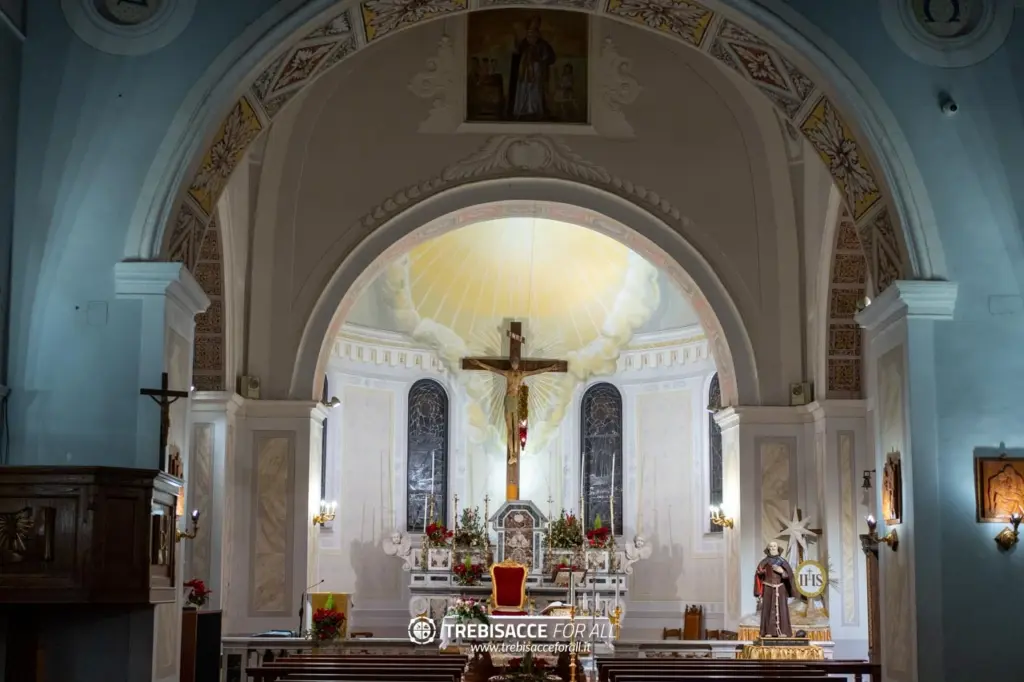
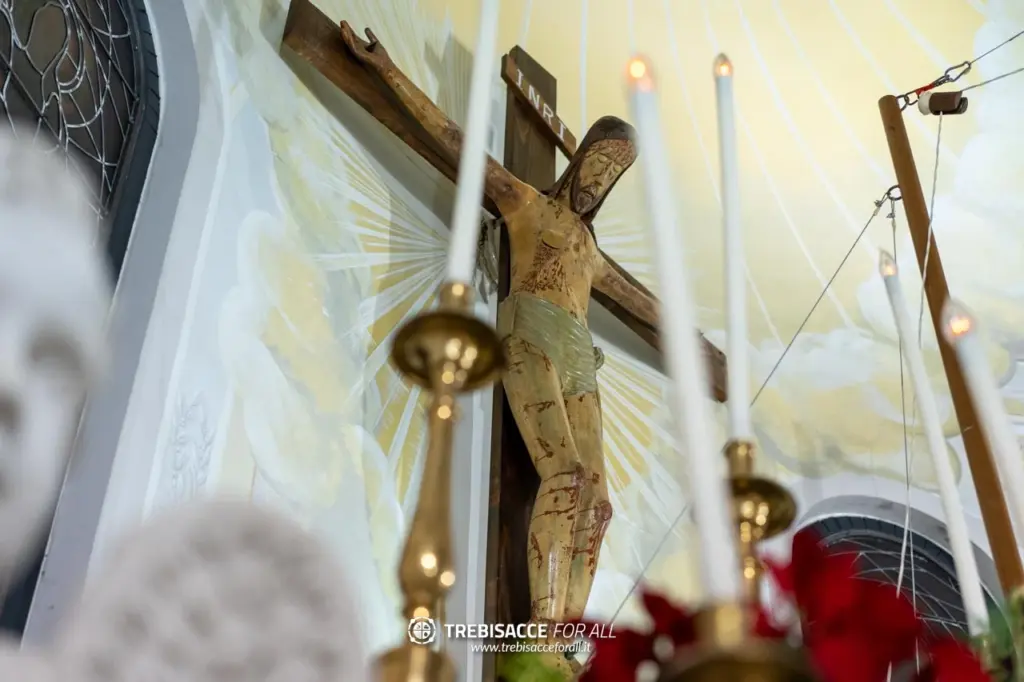
Inside, artistic testimonies are guarded that speak of devotion and memory. The imposing wooden Crucifix that surmounts the high altar – found in 1994 in the basements during restoration work – seems to re-emerge from the silence of centuries to remind us how much history is also made of unexpected discoveries. In the same underground rooms, a 16th-century statue of Sant’Antonio Abate was unearthed, while the statue of San Nicola da Bari, created in 1777 by the sculptor Agostino Pierri, gives a face back to the saint who gives his name and protection to the church.
But what truly strikes is not only the art. It is the continuity. The church is not a monument closed in the past: it is a space still inhabited. Its naves do not only guard wooden works and sacred canvases, but practices, gestures, words repeated over time. It is here that Trebisacce built its collective memory, intertwining religious history with social history.
The Church of San Nicola di Mira is, after all, the common home of the city. A place where architectural stratifications become a metaphor for the generations that succeeded one another. Where faith operated as a shared language, capable of holding together differences and transformations.
And while the bells continue to mark the hours, one understands that this is not only the mother church. It is the symbolic heart of Trebisacce: the point from which the city started and to which, in some way, it always continues to return.